

What materials are best for marquees? How should I choose them?
Many customers find themselves unsure when choosing materials for their event tents. They’re not sure how to make the right choice. Different manufacturers on the market use different materials, and prices vary accordingly. The materials used affect the tent’s lifespan, stability, wind resistance, and waterproofing performance. High-quality materials not only extend the tent’s service life but also reduce maintenance costs and enhance safety. So, what are the best materials for event tents, and how should you choose them? We’ll provide a detailed analysis below.
What materials are used to construct event tents?
I. Frame Materials
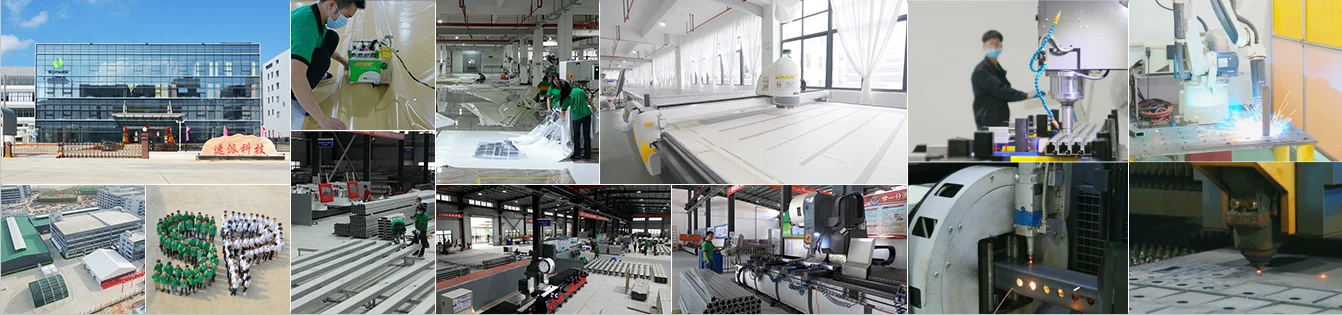
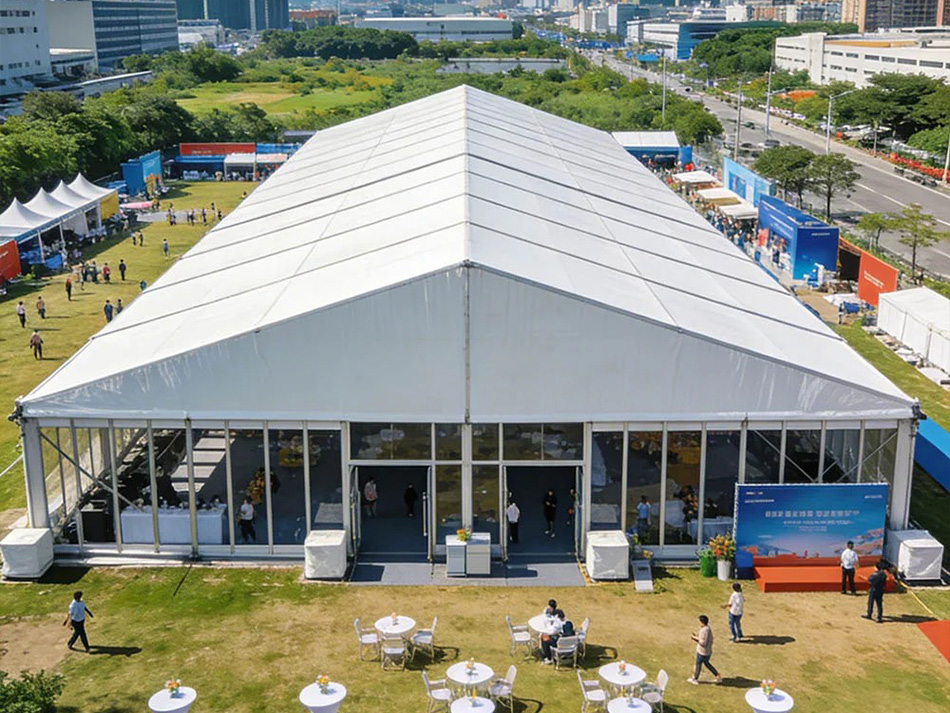
The tent frame is made of high-strength 6061-T6 aluminum alloy. After anodizing, the surface is smooth and oxidation-resistant, with a service life of over 15 years. Aluminum alloy is not only lightweight, high-strength, and highly corrosion-resistant, but also easy to assemble and disassemble in a modular fashion. It shortens the setup time and can withstand winds of 8–10 on the Beaufort scale, making it suitable for long-term outdoor use.
II. Canopy Fabric Materials
The canopy fabric is made of PVC-coated fabric with high waterproof, UV-resistant, and fire-retardant properties. It offers excellent waterproofing, UV protection, flame retardancy, tear resistance, resistance to aging, and self-cleaning capabilities. Common weights include 650 GSM, 850 GSM, and 950 GSM. PVC tarpaulins are highly weather-resistant, with a lifespan of 8–10 years or longer, making them suitable for weddings, trade shows, sporting events, large-scale gatherings, warehousing, and logistics.
III. Wall and Door/Window Materials
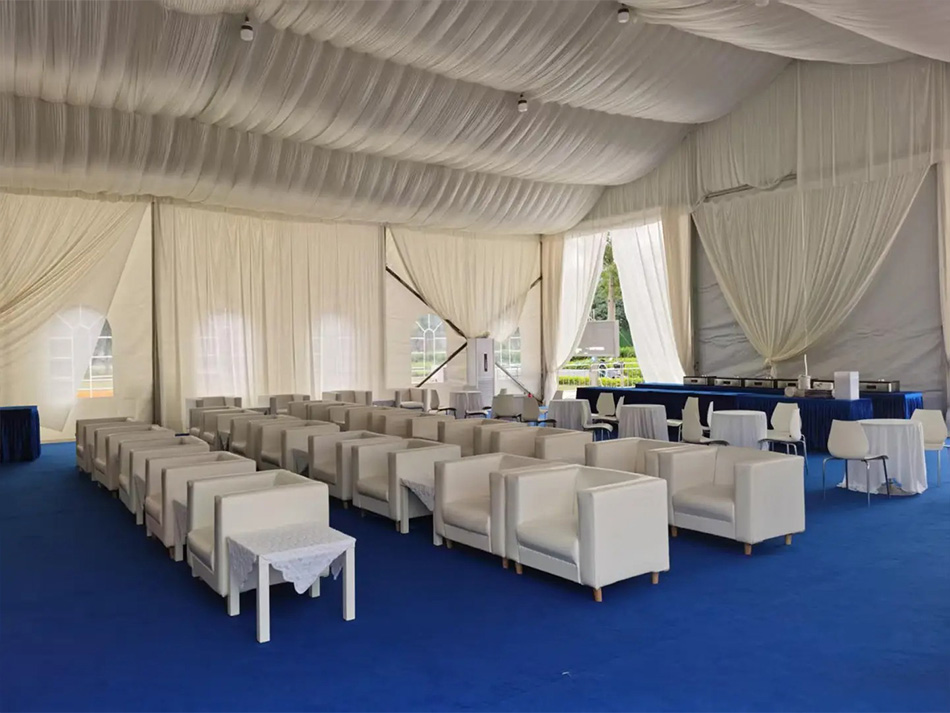
Tent walls can be constructed using PVC knife-coated wall panels, ABS rigid wall panels, glass walls, or sandwich panel walls. Floors can be paired with outdoor-specific anti-corrosion paint or removable platforms, allowing adaptation to various terrains and resolving challenges associated with site setup. For doors and windows, options include roll-up doors, sliding doors, emergency exit doors, double doors, and single doors, ensuring both ventilation and safety.
IV. Accessories and Materials
Tent accessories include hot-dip galvanized steel connectors, high-strength bolt systems, modular plug-in structures, and drainage systems, ensuring the tent’s overall airtightness and safety while preventing collapse and water leakage. Optional configurations such as industrial exhaust fans, LED lighting, air conditioning, stairs, guardrails, and stages can be added to further enhance the tent’s practicality.
How should I choose materials for a tent?
1. Application Scenarios
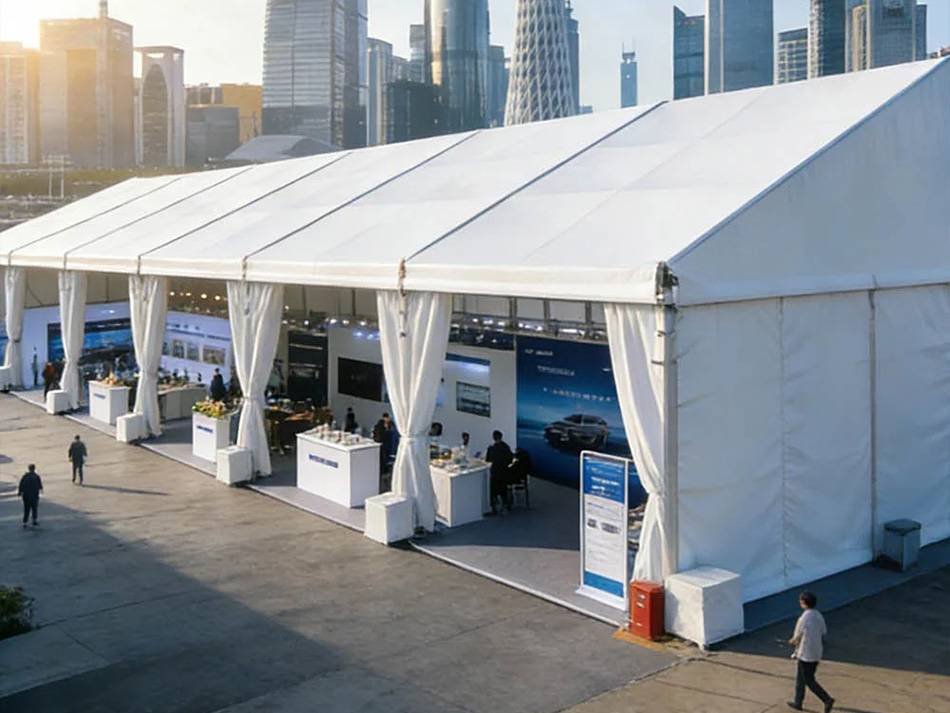
If you are planning temporary events such as weddings or trade shows, we recommend an aluminum alloy frame paired with 650–850 GSM PVC tarpaulin. This solution not only ensures quick installation but also helps reduce costs. Installation typically takes 2–3 days, providing effective protection against sun, rain, and wind to ensure your wedding or trade show runs smoothly.
2. Climate Adaptability
In regions with heavy rain and strong winds, we recommend selecting PVC tarps with larger profiles and higher grammage. In areas with high temperatures and intense sunlight, opt for tarps with high UV protection and self-cleaning coatings. For cold regions, choose flame-retardant and insulated materials. In areas prone to extreme weather such as typhoons or blizzards, design must be based on the operating conditions table to ensure structural safety.
3. Cost-Effectiveness
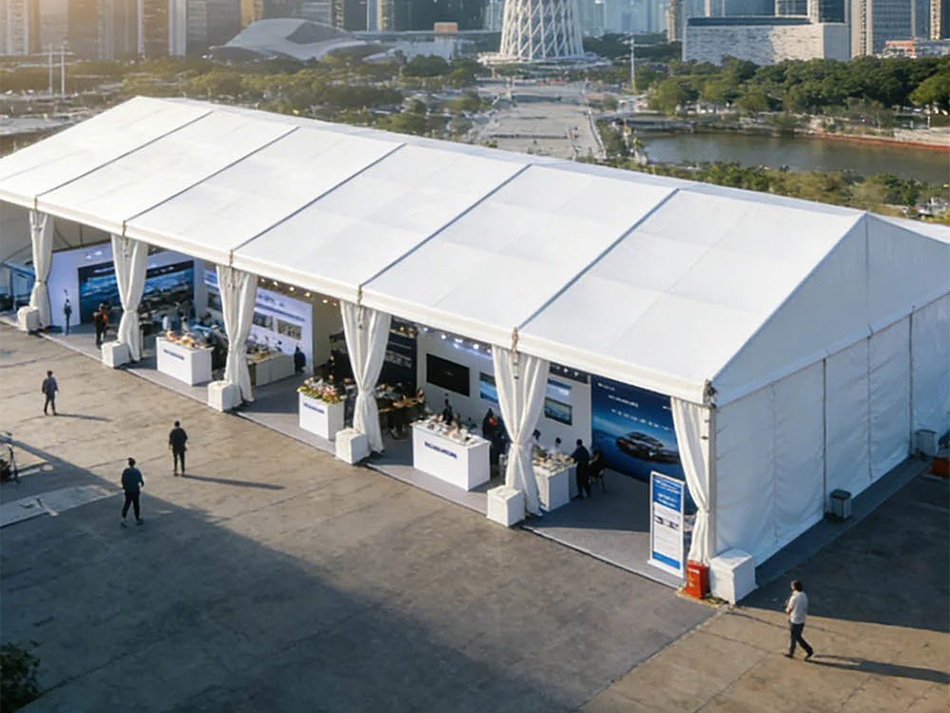
For cost-effectiveness, standard aluminum alloy + PVC tents are suitable for short-term use; high-grammage PVC + premium frames are recommended for medium- to long-term use; and higher-specification profiles with upgraded rigid walls are ideal for permanent or semi-permanent installations. Select based on actual needs and project requirements to meet your specific needs.
4. Brand Reputation
When purchasing a tent, choose manufacturers certified by international standards such as ISO 9001, CE, and TUV, and avoid small, unregulated workshops. You should also review material test reports for the aluminum profiles and tent fabric to ensure they meet specifications. In addition to test reports, examine the manufacturer’s project portfolio to understand their past work.
Summary
The materials used in a tent structure determine its safety, lifespan, weather resistance, and other key factors. Therefore, when selecting a manufacturer, you should carefully review the material specifications, brands, and models listed in the quote to avoid falling into the trap of low-cost offers. If you are looking to customize a tent, we recommend choosing a reputable manufacturer like Holaj Tents—one with proven capabilities, a track record of successful projects, and industry certifications—to provide you with a cost-effective, customized tent solution.
-
 The New Era of Revival: Why the 25x30m USA Church Tent Is Transforming Faith EventsMay,06,2025
 -
 2025 Saudi Arabia Industrial Tent Solutions: Why Superb Holaj Tents Lead the MarketJun,04,2025
 -
 Superb went to Medog to carry out exchange and docking activitiesJul,19,2024
 -
 Successful Installation of 20x45m Sports Tent Hall in Melbourne, AustraliaApr,25,2025
 -
 24x6m Red and White Wedding Tent: Superb Holaj Tent’s Ultimate Outdoor SolutionMay,22,2025



 Links
Links


